Light the Match: Bachelard, Neural Atrophy, and the Revolutionary Act of Thinking for Yourself
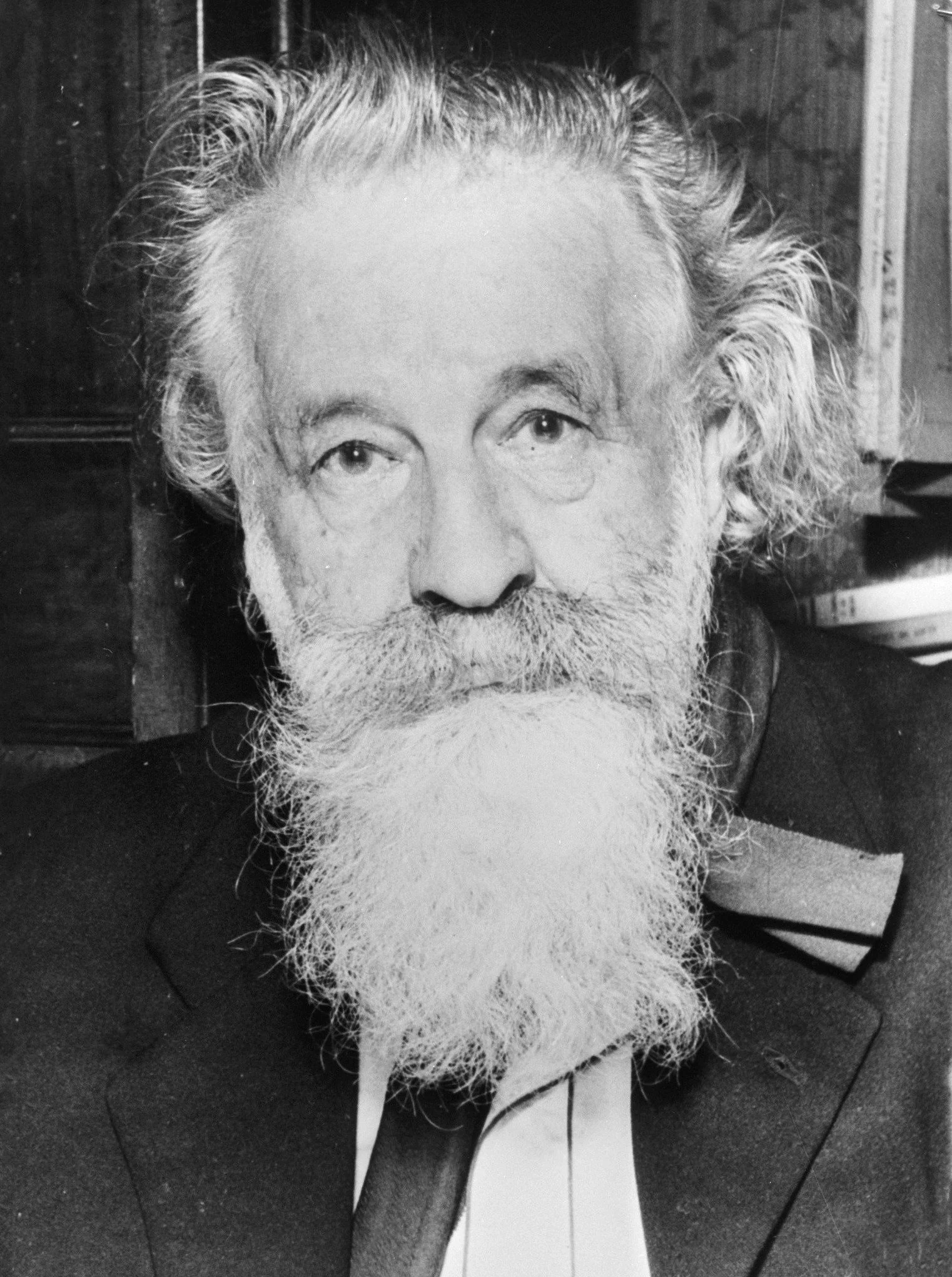
“Fire is thus the ultra-living element. It is intimate and it is universal. It lives in our heart. It lives in the sky.”
- Gaston Bachelard, The Psychoanalysis of Fire, 1938
There is something deeply special about the act of making fire. Not in the domestic click of a lighter, or the blue ghost of a gas ring, but that older, more primitive gesture; creating friction, being patient, and the magical moment when heat becomes light. Gaston Bachelard believed that fire was the first “object” of genuine human reverie; the first thing our ancestors stared into and began - without quite knowing it - to think. Fire did not merely warm the body. It educated the mind, called the imagination to attention, and in so doing, contributed towards making us who and what we are today.
Bachelard’s book ‘The Psychoanalysis of Fire’ was written as an attempt to understand why fire had captivated the human imagination so profoundly, colonising metaphors, myths, and science. Reading it today, it strikes me less as archaeology than as prophecy; something is extinguishing the fire of our mind and imagination. And it is doing so quietly, efficiently, yet with our full consent.
[Context: Gaston Bachelard & The Psychoanalysis of Fire]Gaston Bachelard (1884–1962) was a French philosopher of science and imagination who argued that human knowledge is inseparable from the poetic, subjective life of the mind. In The Psychoanalysis of Fire (1938), he proposed that fire was humanity’s first object of sustained contemplation, our original daydream. Unlike other natural phenomena, fire ‘demands’ reverie: it moves, transforms, and disappears, resisting any purely rational account. For Bachelard, the capacity to sit before a fire and imagine was not a luxury but a cognitive foundation.
The Fire That Made Us
For Bachelard, fire is not merely observed. Fire is dreamed. Its movement invites projection. Its destruction invites meditation on time and loss. Its warmth invites intimacy. The act of staring into a fire is not passive; you are engaging in a neurological and imaginatively profound act. You are practising what Bachelard called reverie: a waking dream state in which the boundaries between the self and world become porous. This is where genuine thought begins, in the blur of contemplation.
Fire demands making: the gathering of fuel, the striking of stone, the tending of flame. The human relationship with fire is fundamentally embodied and requires physical action and participation. It is conjured through friction, failure, and patient repetition. This is what Aristotle meant when he argued that we are not born knowing, but become knowers through doing. The Promethean act of stealing fire was never about possession. It was about the transformative risk of creation itself. We are now, almost without noticing, in the business of outsourcing that risk of creation.
What the Scanners Are Telling Us
Neuroscience is not speculative. Recent fMRI studies examining what happens when individuals outsource cognitive tasks to AI systems have produced findings that should stop us in our tracks. Researchers at institutions including MIT have observed significantly reduced activation in the prefrontal cortex - the seat of critical reasoning, original thought, and working memory - when participants compose with AI assistance, compared with unaided composition. The default mode, which governs imaginative projection and self-referential thought, shows a similar pattern. The brain, encountering a problem that is already solved, simply declines to engage.
[Context: Neural Plasticity & Cognitive Offloading] Neural plasticity refers to the brain’s capacity to reorganise and strengthen neural pathways in response to experience and use. Cognitive offloading describes the act of delegating mental tasks (memory, calculation, composition, navigation) to external tools. Neuroscience has long established that ‘use it or lose it’ applies to cognitive function as surely as to muscle: circuits that are repeatedly bypassed attenuate over time. Recent neuroimaging research is beginning to map what this looks like inside brains that routinely defer to AI.
What makes this particularly alarming is the mechanism; neural plasticity works in both directions. Just as pathways are strengthened through their use, they are weakened through disuse. A brain deferring its labour to an algorithm is not merely resting. It is reorganising itself around non-use. Cognitive offloading to digital tools is not new. GPS reduced hippocampal recruitment in navigational tasks; calculators atrophied arithmetic intuition. But the scope of AI’s incursion is entirely different and much more consuming. It is not one function being offloaded. It is the entire architecture of thinking; the generation of ideas, the composition of language, the formation of argument, and the potential when taking aesthetic risk.
We are not becoming more intelligent with assistance. We are becoming more dependent and, structurally, less capable. Bachelard would have recognised this immediately as the extinguishing of the Promethean flame, not by a god, but by our own willingness to be relieved of the effort of burning.
The Revolutionary Case for Refusal
I’m not suggesting that we abandon our digital tools or that using a calculator is a moral failing. What I am suggesting, however, is that we need to treat creative and intellectual labour as Bachelard treated fire. It is something to be tended, not replaced. The cultural logic of AI adoption is the logic of frictionlessness. Every tool is presented as a means of removing the difficulty of thought. The blank page is pre-populated, the argument is pre-structured, the image is pre-generated, and the code is pre-written. But there is another word for the removal of generative friction: impoverishment. To be freed from the struggle of making is to be freed from the making itself. The writer who never wrestles with a sentence does not merely produce worse sentences. They become diminished.
Bachelard’s Prometheus did not steal fire in order to generate warmth. He stole it to give humanity the capacity to make, to transform, to become. The revolutionary act now is not a rejection of technology in some sweeping, theatrical gesture. It is the far more difficult daily discipline of insisting on the struggle. Of sitting with the blank page, and resisting the prompt box, allowing yourself to be uncertain, clumsy, and slow. These are not failures of creativity. They are its preconditions. Every neuron that fires in genuine effort is a match struck against the dark.
In Conclusion
Bachelard wrote that fire is the only element that receives two contrary valuations: good and evil, warmth and conflagration. This moral ambivalence is not a problem to be resolved but the very source of fire’s imaginative power. To sit before a fire is to sit before the irreducible complexity of existence itself.
Artificial intelligence has been sold to us as the abolition of that complexity, a frictionless passage from question to answer, from intention to output. A brain that never struggles does not grow stronger. It grows quiet. And a civilisation that ceases to wrestle with its own imagination does not advance. It dims.
Light the match. Write the clumsy sentence. Sit before the difficulty until it gives you something. The fire that made us human is not waiting to be replaced by an algorithm. It is waiting to be tended by us, in us, as an act of something that looks, these days, almost like revolution.
